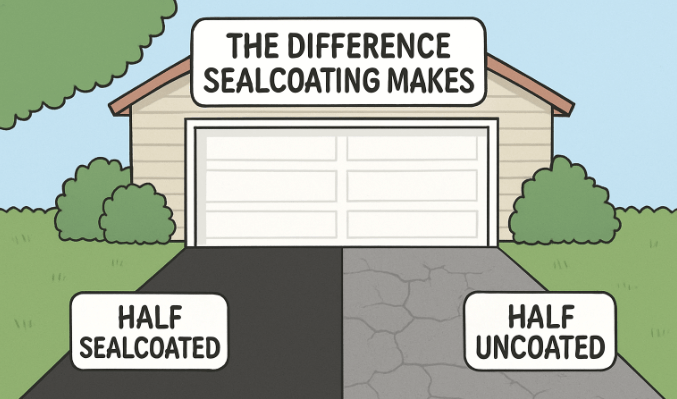
Maintaining your property’s asphalt surfaces is essential to preserving both their appearance and structural stability. Whether you own a business, manage a residential complex, or simply want to enhance your own driveway, asphalt sealcoating offers an accessible way to safeguard your investment. Read more on this page for localized service options and tips for optimal results.
Table of Contents
Sealcoating involves applying a protective layer to asphalt surfaces, serving as a barrier against harmful elements such as weather and wear. This treatment not only enhances the appearance of driveways and lots but also provides significant long-term financial benefits, thereby increasing property value.
Regular maintenance through sealcoating is crucial, as untreated asphalt deteriorates quickly, leading to costly repairs. By investing in routine seal-coating, property owners can ensure their asphalt remains visually appealing and functional, thereby reducing costs and enhancing overall property attractiveness. Understanding the sealcoating process and its benefits is essential for making informed maintenance decisions.
What Is Asphalt Sealcoating?
Asphalt sealcoating involves applying a coal-tar- or asphalt-emulsion-based liquid over an existing asphalt pavement. The purpose is to create a barrier that protects the surface from water, oils, UV rays, and other factors that accelerate wear. The process also rejuvenates the original deep-black color of freshly laid asphalt, restoring its visual appeal while extending pavement lifespan.
Protection Against Weather Elements
Rain, snow, and sunlight are the primary culprits behind premature asphalt deterioration. Water causes subsurface erosion, while freeze-thaw cycles worsen cracks and create potholes. Sunlight, particularly UV rays, breaks down the binder in asphalt, leading to brittleness and fading. Sealcoating forms a durable shield that prevents water infiltration, minimizes the negative effects of the freeze-thaw cycle, and blocks UV rays from damaging the surface.
See also: Innovative Strategies for Enhancing Facility Management in Modern Construction
Prevention of Cracks and Potholes
Whenever water seeps into unprotected cracks, it undermines the pavement’s structural base. During freezing temperatures, trapped water expands, widening cracks and eventually turning them into potholes. Sealcoating helps fill minor surface cracks and reduces the likelihood of water penetrating the asphalt. It serves as preventive maintenance, stabilizing the surface and extending the time between costly repaving projects.
Enhanced Curb Appeal
A property’s exterior plays a significant role in first impressions. Sealcoated asphalt boasts a crisp, black finish that instantly revitalizes the look of your parking lot or driveway. For commercial properties, this translates to a more attractive setting for customers or tenants. Good curb appeal can directly influence perceived property value and positively affect the sale or lease of real estate.
Cost-Effectiveness
Routine sealcoating offers a high return on investment by reducing overall maintenance costs. Addressing minor issues with regular sealcoating can Preventing small issues from escalating into larger, more expensive repairs is essential.
This proactive strategy not only extends pavement life but also lowers annual spending on patching, resurfacing, or full replacements. According to the Yelp seal coating cost guide, sealcoating is generally far less expensive than rehabilitating or reconstructing damaged pavement.
Extended Pavement Lifespan
With proper maintenance, asphalt surfaces can last up to 30 years, and sometimes longer. Routine sealcoating is a key part of any effective pavement management plan. By protecting against oxidation, chemical spills, and abrasion, sealcoating helps you realize the maximum return on your initial paving investment. The process can double the usable life of an asphalt surface when performed every few years.
Improved Safety
Sealcoated surfaces are smoother, fill in small cracks, and offer better traction for both vehicles and pedestrians. This decreased risk of tripping and vehicle damage translates into a safer environment overall, especially in high-traffic areas such as commercial lots, schools, or community centers. Improved surface markings can also be more visible on newly sealcoated asphalt, thereby improving traffic management.
Optimal Sealcoating Schedule
Experts generally recommend having asphalt surfaces sealcoated every 2 to 3 years. The ideal frequency depends on usage, climate, and existing surface conditions. High-traffic areas or regions with severe weather may require more frequent applications.
Regular visual inspections of your pavement can help you determine when it is time to reapply sealcoat, ensuring the longest possible pavement lifespan and the greatest return on your maintenance investment.
In summary, asphalt sealcoating is a valuable and practical investment for any property owner. From protection against harsh weather and everyday wear to improving appearance and safety, the advantages are clear. By implementing a regular sealcoating schedule, you can minimize costs, maximize value, and ensure your asphalt surfaces remain both attractive and functional for decades.
Conclusion
Asphalt sealcoating is more than a cosmetic upgrade, it’s a strategic investment in the longevity, safety, and appearance of your pavement. By protecting against water damage, UV exposure, and daily wear, sealcoating prevents cracks, potholes, and costly repairs. It also enhances curb appeal, improves traction, and contributes to a safer environment for vehicles and pedestrians.
Regular applications, ideally every 2 to 3 years, help extend the lifespan of your asphalt, maximize the return on your initial paving investment, and reduce long-term maintenance costs. Ultimately, routine sealcoating ensures that asphalt surfaces remain durable, functional, and visually appealing for years to come.