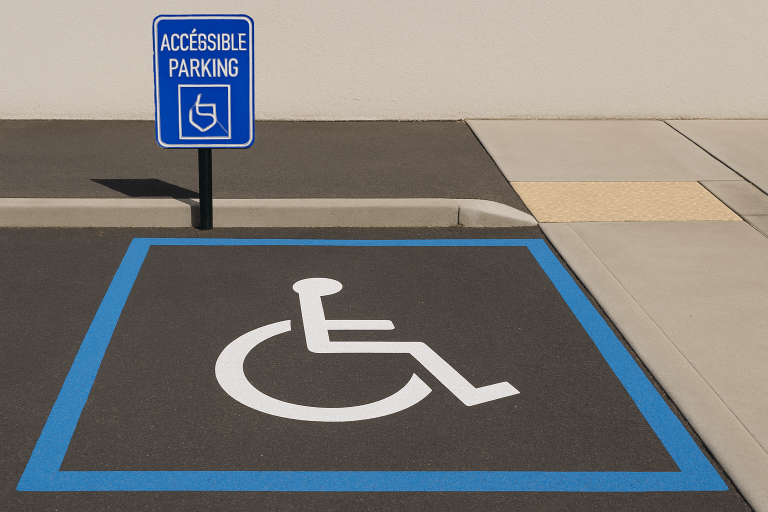
Ensuring the safety and accessibility of asphalt surfaces is a top priority for public spaces, commercial lots, and municipal roadways. The presence of effective signage and well-maintained pavements helps minimize accidents while supporting compliance with important regulations such as the Americans with Disabilities Act (ADA).
Infrastructure elements designed with accessibility in mind are essential for fostering inclusive environments for all. For property owners or managers looking to upgrade or maintain their lots, exploring parking lot paving La Porte, IN can be a crucial first step toward safer spaces.
Accessible environments are vital not only for regulatory compliance but also for demonstrating a commitment to community well-being and inclusiveness. From clearly defined pathways to precise line markings and visible signage, each aspect of asphalt surface management plays a significant role in public safety.
Table of Contents
Designing Accessible Parking Spaces and Aisles
ADA-compliant parking facilities require more than just a painted symbol. Properly designed accessible parking spaces should have ample width and an adjacent accessible aisle to accommodate mobility devices such as wheelchairs and lifts. When designing for van-accessible parking, the requirements become even more stringent, with wider aisles needed for ramp deployment and safe ingress or egress.
Clear signage at each accessible space is mandatory, allowing individuals with disabilities to identify available spots and avoid confusion quickly. Spaces should seamlessly connect to building entrances via curb ramps, minimizing travel distances and eliminating unnecessary barriers.
Implementing Proper Curb Ramps
Curb ramps create vital transitions between parking areas, walkways, and building entrances. According to ADA specifications, curb ramps must not exceed a slope of 8.3% and should include detectable warning surfaces to alert visually impaired users to roadway crossings. Precision in the installation process is essential, utilizing high-quality and textured materials for enhanced safety.
Proper placement of curb ramps—ideally aligned with crosswalks and accessible routes—improves usability for those with mobility challenges. Detectable warnings, typically in the form of raised domes, provide tactile feedback to signal changes in pathways, which is especially important at intersections and public facilities (U.S. Department of Justice – Curb Ramps).
Maintaining Proper Slope and Cross-Slope for Walkways
Walkways across asphalt surfaces should provide smooth and level paths for all users, particularly those employing mobility aids. ADA guidelines specify that the maximum allowable running slope for walkways is 5%, and the cross-slope should not exceed 2%. Failing to comply with these standards can create hazards, such as tilting or difficulty in propulsion for wheelchair users.
Regular inspections and grading ensure compliance is maintained. Special consideration should be given to how drainage impacts slope, as water accumulation can degrade surfaces and introduce additional risks.
Ensuring Proper Line Painting and Signage
Accurate and clearly visible line striping is fundamental for ADA compliance and overall safety. Parking lots should feature universally recognized symbols – such as the International Symbol of Accessibility – painted with high-contrast, durable paints. Properly installed signage, placed at the designated heights and locations, enables everyone to locate accessible spaces quickly.
In addition to initial installation, routine touch-ups and repainting guarantee that markings remain legible over years of regular use and exposure to weather. This ongoing effort supports both safety and regulatory compliance (The New York Times – ADA Compliance in Public Spaces).
Regular Maintenance and Repairs Asphalt Surface
Regular maintenance serves as the backbone of long-term accessibility and safety on asphalt surfaces. Proactive inspections help spot hazards such as cracks, potholes, or surface wear before they become significant issues. Swift repairs, including patching, sealing, and resurfacing, minimize the likelihood of accidents and extend the lifespan of the infrastructure.
Prioritizing maintenance makes both practical and financial sense—costly liabilities are less likely to arise when pavement health is consistently monitored.
Enhancing Visibility with Reflective Markings
Reflective paint and pavement markers significantly enhance the visibility of crosswalks, traffic lanes, and stop bars, particularly in low-light conditions or inclement weather. These enhancements help alert both motorists and pedestrians to changes in road alignment, pedestrian crossings, and potential hazards, reducing the risk of collisions.
Choosing materials rated for high visibility and durability ensures that these critical safety features perform well over time, even in harsh environments.
Implementing Traffic Calming Measures
Traffic calming strategies—such as speed humps, raised crosswalks, and roundabouts—are essential in high-traffic areas, school zones, and residential neighborhoods. Incorporating these techniques on asphalt surfaces helps reduce vehicle speeds, making pedestrian movement safer and enhancing the overall usability of public spaces.
Individual measures should be selected based on site-specific needs, with consideration given to access by emergency vehicles and maintenance crews.
See also: Coral Essentials Hoodie: The Ultimate Guide to Comfort, Style, and Quality
Proper Lighting
Adequate lighting is a non-negotiable element of asphalt safety. Well-lit parking lots, crosswalks, and sidewalks significantly reduce the likelihood of accidents during nighttime hours. Implementing energy-efficient LED streetlights or solar-powered markers boosts visibility and safety while supporting sustainability initiatives.
Consideration should also be given to the placement and height of lighting fixtures to ensure uniform coverage and minimize dark spots.
Final Thoughts
Safeguarding asphalt surfaces through well-planned design, rigorous maintenance, and clear signage maximizes both accessibility and regulatory compliance. Implementing these measures isn’t just about legal adherence—it signals an organizational commitment to safety, inclusivity, and the broader community. Whether upgrading existing facilities or planning new construction, every choice in asphalt design and maintenance should reflect a long-term vision for public wellbeing and universal access.