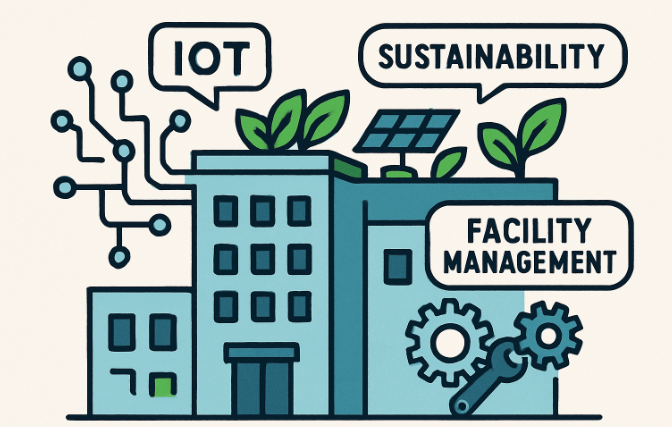
Facility management in today’s construction industry is experiencing a transformation powered by digital solutions and an increasing focus on sustainability.
Table of Contents
Introduction
As facility needs grow more complex, industry leaders are turning to innovation to address challenges and evolve their management strategies. Visit this website to explore additional insights and resources connected to this trend in facility management.
This rapidly shifting industry landscape underscores the importance of staying ahead with technologies that drive efficiency, reduce operational costs, and deliver greater value throughout the building lifecycle.
Facility managers are expected to deliver environments that are both operationally efficient and environmentally responsible and adaptable to future needs.
Integrating advanced facility management strategies is crucial for ensuring that constructed assets perform optimally throughout their lifecycle. The implementation of tools such as real-time monitoring, digital twin modeling, and predictive analytics enables anticipating issues, acting promptly, and maintaining seamless operations.
Technological Advancements in Facility Management
Emerging technologies are fundamentally reshaping the facility management sector. The adoption of the Internet of Things (IoT) for remote monitoring and automation is providing real-time data on equipment performance, environmental conditions, and energy consumption.
These insights help facility managers make immediate, informed decisions that boost efficiency and safety. AI-driven software can process vast amounts of data, automate anomaly alerts, and deliver predictive maintenance insights, thereby ensuring resources are allocated effectively and risks are minimized.
According to Forbes, AI and IoT are at the forefront of facility management innovation, improving maintenance operations and reducing costs across many industries.
Sustainable Practices for Efficient Operations
Sustainability is now a foundational element in modern facility management. Embracing environmentally conscious building practices can significantly lower utility bills, minimize environmental impact, and boost occupant well-being.
Facilities are increasingly using smart technologies like automated climate control and adaptive lighting, systems that optimize energy use based on real-time occupancy and activity levels. Selecting low-impact materials and encouraging responsible waste management are also part of this comprehensive sustainability approach.
The market now expects building owners and managers to meet higher sustainability standards supported by regulatory requirements. By integrating efficient energy and water systems, facilities not only cut long-term costs but also enhance their public reputation, making them more attractive for tenants and investors focused on ESG (Environmental, Social, and Governance) principles.
Continuous Assessment and Proactive Maintenance
Shifting from periodic inspections to continuous assessments brings a proactive mindset to facility management. By monitoring conditions in real time, facility managers can detect inefficiencies or maintenance issues before they escalate into larger, costlier problems.
This method reduces unplanned downtime and extends the lifespan of facility assets, resulting in significant savings and improved overall reliability.
Using sensor data and cloud-based platforms, teams can track equipment performance, schedule interventions, and store digital records to guide maintenance decision-making. This upgrade from a reactive to a proactive process has become essential in supporting the operational demands of complex, technology-rich facilities.
Integrating Digital Twins for Enhanced Oversight
Digital twin technology has become a cornerstone of intelligent facility management. A digital twin is a dynamic, virtual representation of a physical building, capable of modeling, simulating, and analyzing real-time data from sensors embedded throughout the facility.
The use of digital twins empowers facility managers to identify inefficiencies, model repair scenarios, and plan upgrades or renovations with far greater precision and confidence.
With digital twins, different scenarios can be simulated before taking actions in the physical environment, saving both time and money. This approach fosters better resource allocation and quick adaptation to changing demands.
As the technology matures, its ability to predict asset performance and lifecycle costs will be pivotal to operational excellence and long-term value preservation.
Leveraging AI for Predictive Maintenance
Artificial intelligence enables facility managers to unlock predictive maintenance capacities. Machine learning algorithms interpret complex data patterns to forecast equipment malfunction risks well before failure occurs.
By scheduling targeted maintenance based on AI insights, facilities reduce unnecessary service visits, extend equipment life, and better control repair budgets.
The efficiency gains from predictive maintenance are significant, especially in large, complex buildings that rely on multiple mechanical systems. This approach minimizes disruptions and optimizes budgets through data-driven maintenance planning, aligning perfectly with the goals of modern facility management.
Adopting Modular Construction Techniques
Modular construction, in which building components are prefabricated off-site and assembled on-site, has grown in popularity for its speed, precision, and sustainability. For facility management, modular buildings mean easier access for upgrades and repairs, as modular elements can be swapped or serviced rapidly and efficiently.
This construction approach reduces waste, shortens project timelines, and drives quality control, delivering long-term operational benefits. Moreover, modular designs can be updated or expanded more easily than traditional structures, ensuring facilities remain functional and adaptable as requirements evolve.
See also: How Modern Roofing Solutions Are Redefining Commercial Buildings
Final Thoughts
Modern facility management is evolving rapidly, with technology and sustainability working hand in hand to define industry standards. Continuous assessment, digital twins, AI-driven insights, and modular construction offer facility managers new pathways to optimized performance, lower costs, and greater adaptability. Embracing these strategies is key for any organization aiming to stay ahead in a competitive and dynamic construction marketplace.