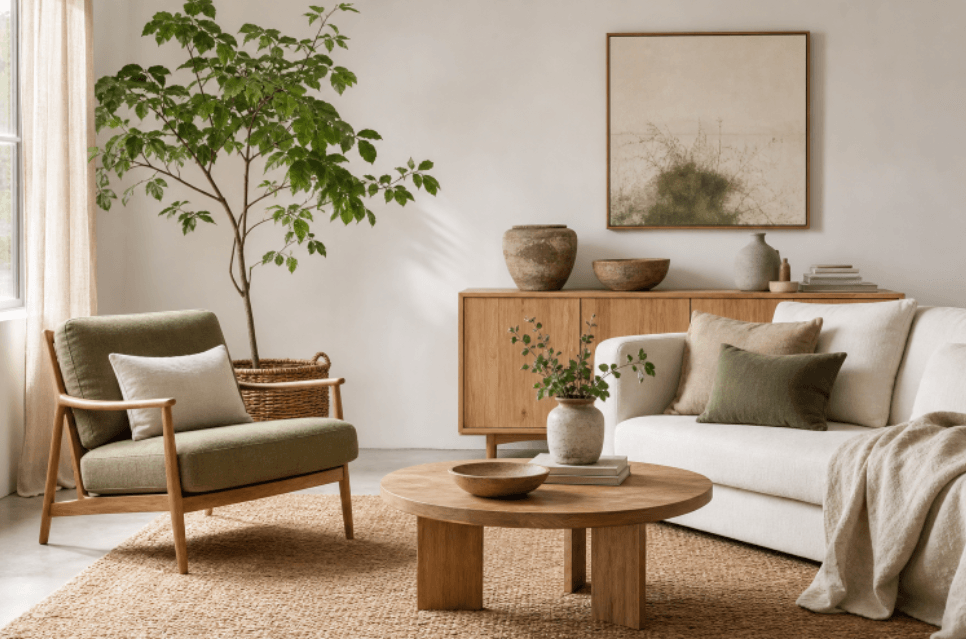
A calm, nature-inspired home is less about following one decorating trend and more about choosing details that make daily life feel grounded. Soft colors, tactile materials, living greenery, useful furniture, and personal objects can work together to create a room that feels welcoming rather than overly styled.
Browsing Salt Lake City home decor shops can also help you find pieces with character, from handmade pottery to warm wood accents.
The goal is not to recreate the outdoors inside. It is to borrow the balance found in nature: variation without chaos, color without excess, and layers that feel collected over time. Whether your home is modern, traditional, rustic, or eclectic, a few thoughtful choices can make it feel more peaceful and personal.
Table of Contents
Why Nature-Inspired Rooms Feel So Comfortable
Nature-inspired design uses colors, materials, and shapes that suggest the outdoors. Think sandy neutrals, leafy greens, weathered wood, soft linen, rounded forms, and handmade finishes. These elements can soften a room that feels stark or disconnected. The best spaces do not rely on a strict formula. Instead, they combine visual calm with practical comfort.
A room becomes more inviting when it has contrast in measured amounts. Smooth glass beside woven rattan, a dark wood table against pale walls, or a sculptural lamp near a trailing plant creates interest while maintaining a relaxed mood. The key is repetition. Repeat a color, finish, or shape often enough that the room feels intentional.
Start With A Simple Nature-Based Color Palette
Begin with one main shade, such as warm white, sand, sage, clay, or muted blue. Add a darker color, perhaps walnut, charcoal, olive, or deep brown, to give the room visual weight. Then use one or two accents in smaller doses through pillows, art, books, or ceramics.
A limited palette prevents visual clutter and gives different pieces a reason to belong together. Color can come from walls, rugs, upholstery, artwork, and plants, so there is no need to buy every accessory in the same shade. Before committing to paint, test samples in daylight and again after sunset. A color that looks fresh in the morning may feel much cooler or darker under evening lighting.
Bring In Texture Before Adding More Decor
Texture creates depth even when the palette is quiet. Linen curtains, wool throws, jute rugs, ceramic vessels, stone trays, aged metal, and wood furniture all add variety without demanding more color. Pair rough and smooth finishes, such as a woven basket beside glazed pottery or a stone bowl on a polished wood console.
Whenever possible, introduce texture through useful pieces. A substantial rug can anchor a seating area, baskets can hide everyday clutter, and a linen throw can make a chair more comfortable. This approach keeps a room from looking like it was decorated simply for the sake of decoration.
Use Plants As Living Decor
Plants can become a focal point, soften a hard corner, create a gentle divider between zones, or simply add a small note of color to a shelf. Match the scale to the room. A large floor plant can fill an empty corner near a window, while compact plants work well on side tables, bookcases, and kitchen ledges.
Group plants by height, leaf shape, or container style for a more collected look. Practical living gallery arrangements often combine shelves, stands, artwork, and varied elevations so every plant has room to be noticed. Before buying, check each plant’s light needs, drainage requirements, watering routine, and pet safety. Low-care varieties are often the wiser choice for dim rooms, frequent travel, or busy schedules.
Pair Greenery With Art And Meaningful Objects
Greenery feels especially at home beside botanical prints, landscapes, abstract handmade ceramics, and objects gathered over time. Choose art that repeats one or two colors from the room rather than matching everything exactly. A landscape with warm brown and blue tones can connect a walnut table, a clay vase, and a muted rug without making the palette feel forced.
Instead of creating many unrelated displays, start with one larger artwork or mirror and add a small supporting group nearby. Books, family pieces, travel finds, and handmade objects add meaning that cannot be purchased through a single style category. Leave some blank shelf and wall space so those items can stand out.
Choose Furniture That Supports The Room
Comfort and scale matter more than a short-lived trend. Choose seating that suits how you actually relax, tables that allow easy movement, and storage that gives everyday items a home. Wood finishes, curved edges, woven details, and natural upholstery can reinforce the theme, but every piece should have a clear purpose.
Keep walkways open around sofas, dining chairs, coffee tables, and storage pieces. In a smaller room, one well-proportioned cabinet may be more calming than several decorative storage baskets. Closed storage is particularly useful for keeping cords, paperwork, toys, and other visual noise out of sight.
Create A Focal Point Without Overcrowding
- Choose one anchor, such as a large plant, a fireplace, artwork, a mirror, or a sculptural table.
- Arrange a few supporting pieces around it, using repeated colors or materials.
- Leave open space so the focal point is easy to notice.
- Remove one item if the arrangement begins to feel busy.
Organic colors, landscape-inspired patterns, and natural textures can bring warmth to contemporary rooms without making them feel rustic. This approach to nature-inspired home design works best when the room has one clear visual anchor and several quieter supporting layers.
Use Lighting To Support A Calmer Mood
Lighting changes how every color and texture feels. Layer overhead fixtures with table lamps, floor lamps, wall lights, or candles so the room can adapt from daytime activity to a quieter evening routine. Warm bulbs are usually more relaxing in bedrooms, dining rooms, and living areas, while linen, paper, rattan, and frosted-glass shades help soften glare.
Place lamps near reading chairs, artwork, plants, and dark corners rather than relying on one bright ceiling fixture. This creates pools of light that make a room feel more comfortable and considered.
Build The Look Room By Room
Living Room
Start with comfortable seating and a grounded rug. Add one large plant, a wood accent, and a small group of meaningful objects rather than filling every surface.
Bedroom
Use soft bedding, low-contrast colors, and limited bedside decor. Natural textures such as linen, cotton, wood, and wool help the room feel more restful.
Dining Room
Keep the table useful for meals and gatherings. A simple centerpiece of branches, seasonal flowers, greenery, or pottery adds life without taking over the surface.
Home Office
Place the desk near natural light when possible. One plant, a focused task lamp, and closed storage can reduce distractions while making the workspace feel less sterile.
Common Mistakes To Avoid
- Using too many shades of green without a balancing neutral.
- Placing plants where they block windows, vents, or walkways.
- Buying decor only because it looks good in a photograph.
- Mixing many materials without repeating any of them.
- Filling every shelf, wall, and tabletop.
- Ignoring cleaning, durability, watering, and daily use.
A Simple Weekend Refresh Plan
- Remove items that no longer serve the room.
- Adjust furniture to improve walking space.
- Repeat one color in three places.
- Add one useful natural texture, such as a woven basket or wood tray.
- Group plants and objects by height.
- Improve lighting in one dark area.
- Live with the arrangement for a week before buying anything new.
Conclusion
A calm, nature-inspired home does not require a major renovation or complete style change. A thoughtful palette, a few tactile materials, comfortable furniture, living greenery, and meaningful decor can shift the entire mood of a room. The strongest results usually come from editing instead of adding. When each piece supports comfort, function, or personal meaning, the home feels fresh, welcoming, and easy to live in.